

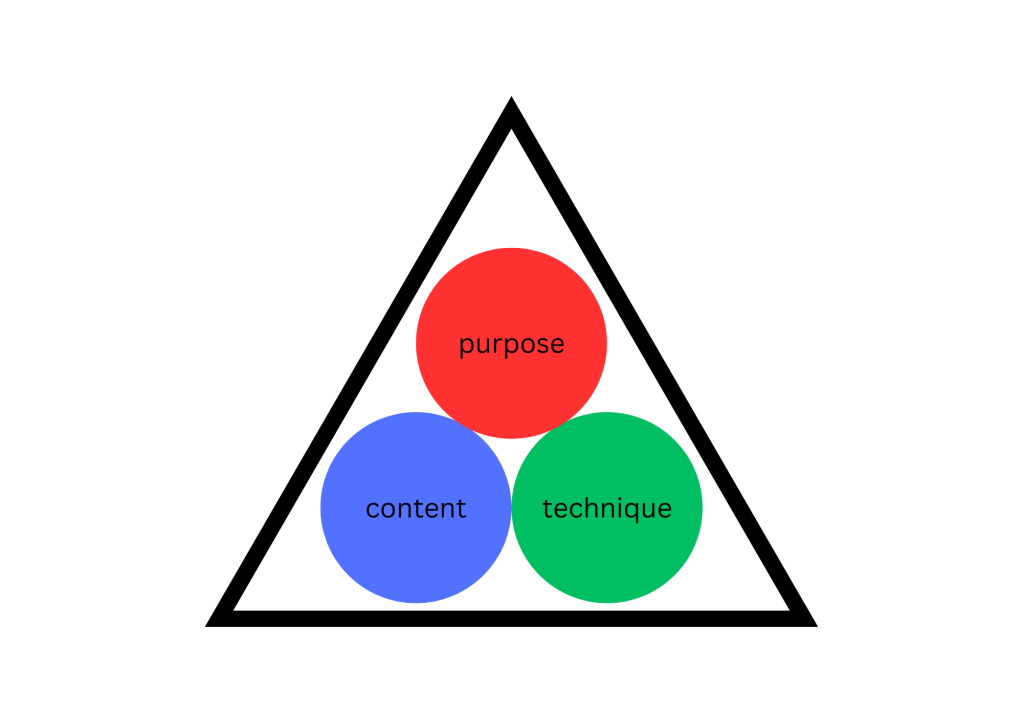
In the world of language education, three fundamental elements shape our approach to teaching: purpose, content, and technique. These core components provide a framework for answering essential questions about language instruction and help educators develop effective teaching strategies.
Purpose: The Why and Who of Language Teaching
When we consider the purpose of language teaching, we focus on two key questions:
- Why should we teach languages?
- Who should we teach?
The reasons for learning a language can vary greatly among students, and different teaching methods have emerged over time to address these diverse motivations. Understanding the ‘why’ behind language learning helps teachers tailor their approach to meet students’ specific needs and goals.
Content: The What of Language Teaching
Content refers to the materials and resources used in language instruction. The main question here is:
- What do you need to teach a language?
This category encompasses everything from textbooks and diagrams to audio recordings and digital resources. Different teaching approaches prioritize various types of content, reflecting their underlying philosophies and methodologies.
Technique: The How of Language Teaching
Technique focuses on the strategies and activities employed to convey language forms. The key questions in this category are:
- How does a learner learn a language?
- How should a teacher teach?
- How do we help students remember a language?
These questions guide educators in selecting appropriate teaching methods and creating effective learning experiences for their students.
The Interconnection of Purpose, Content, and Technique
One crucial insight for language teachers is that purpose shapes both content and technique. This means that understanding why you’re teaching and who you’re teaching to will greatly influence the materials you use and the strategies you employ.
As you develop your teaching philosophy, it’s essential to continually reflect on these fundamental elements. By doing so, you’ll be better equipped to adapt your approach to meet the diverse needs of your students and create more engaging and effective language learning experiences.
Remember, the field of language teaching is ever-evolving, and staying open to new ideas and approaches will help you grow as an educator throughout your career.
You’re a smart Banana! *sticks gold star on your forehead*
 Teacher Lizzy
Leave a comment